
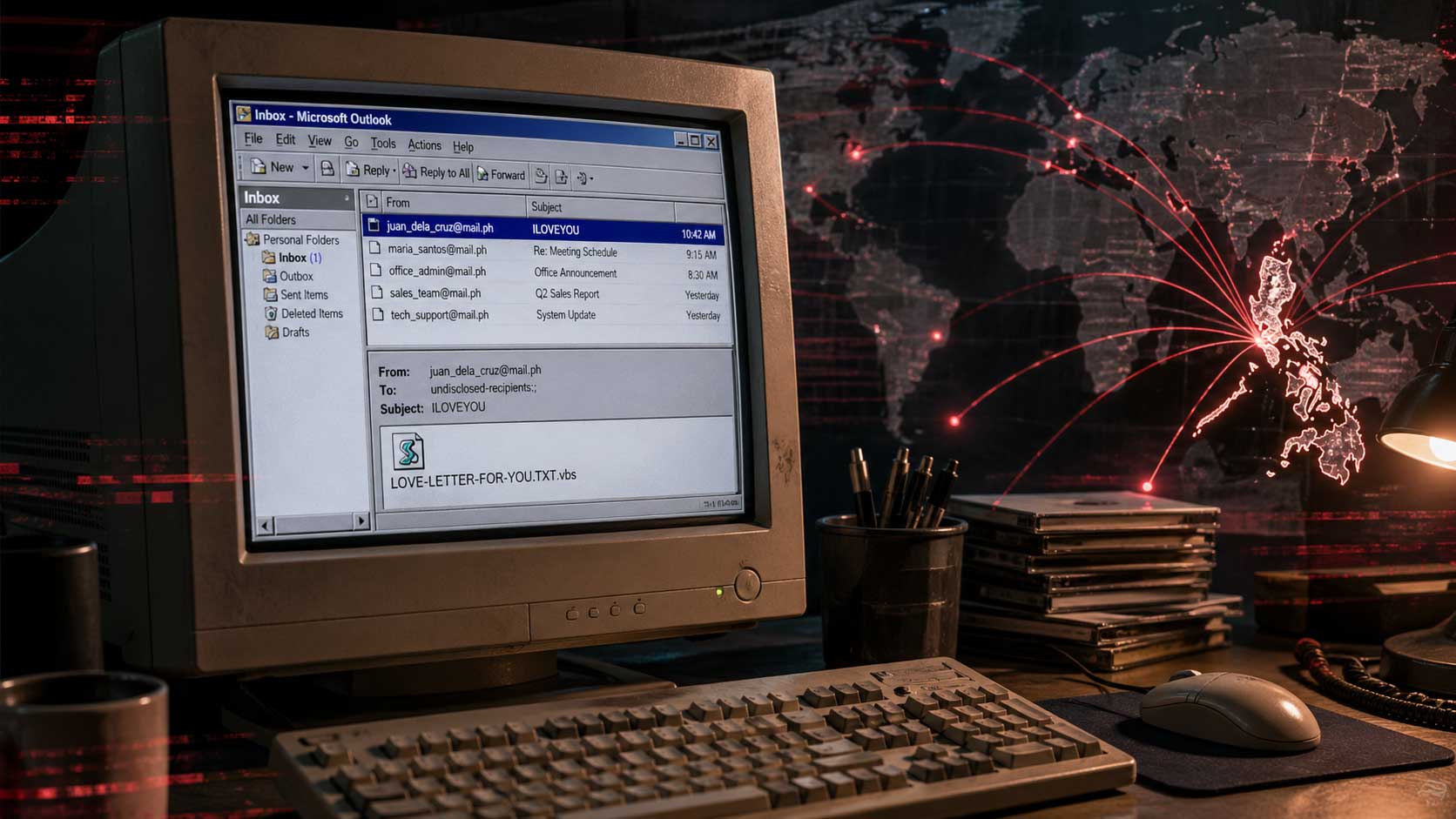
First Computer Virus in the Philippines: The Story of the ILOVEYOU Virus
The first famous computer virus linked to the Philippines was the ILOVEYOU virus, also known as the Love Bug or Love Letter worm. It spread across the world in May 2000 through email and became one of the most well-known malware incidents in internet history.
Many people search for it as the “first computer virus in the Philippines,” but technically, ILOVEYOU was a computer worm. A worm can copy itself and spread automatically, while a traditional virus usually needs to attach itself to another file or program. Even with that technical difference, ILOVEYOU remains one of the most important cybersecurity stories ever connected to the Philippines.
What Was the First Computer Virus in the Philippines?
The most famous computer virus associated with the Philippines was the ILOVEYOU virus. It became globally known after it spread through email messages with the subject line “ILOVEYOU” and an attachment that looked like a love letter.
Once opened, the attachment triggered malicious code that could overwrite files and send copies of itself to people in the victim’s email address book. This made the worm spread extremely fast, especially in offices, businesses, schools, and government networks that relied heavily on email.
Why Was It Called the ILOVEYOU Virus?
The malware became known as the ILOVEYOU virus because the email subject line used the simple and emotional phrase “ILOVEYOU.” This made people curious and encouraged them to open the message.
The attachment appeared to be a text file named like a love letter, but it was actually a script file. This trick is an early example of social engineering, where attackers use emotion, curiosity, trust, or urgency to make people click something dangerous.
How Did the ILOVEYOU Virus Spread?
The ILOVEYOU virus spread mainly through email. When someone opened the infected attachment, the worm sent itself to contacts in that person’s address book. This created a chain reaction.
Because the message appeared to come from someone the recipient knew, many people trusted it and opened the attachment. That is one reason the worm spread so quickly around the world.
At the time, many users were not yet trained to recognize suspicious email attachments. Antivirus protection and cybersecurity awareness were also not as common as they are today.
Who Created the ILOVEYOU Virus?
The ILOVEYOU virus was linked to Onel de Guzman, a Filipino computer student from Manila. Reports about the case said the malware was connected to a script written in the Philippines.
The case became controversial because the Philippines did not yet have strong cybercrime laws at the time. As a result, authorities faced legal difficulties in prosecuting the case under existing laws.
Why Did the ILOVEYOU Virus Become So Famous?
The ILOVEYOU virus became famous because of how fast it spread and how much disruption it caused. It affected personal computers, companies, media organizations, and government systems in different countries.
Its success came from a simple but powerful trick: it used human emotion. The phrase “ILOVEYOU” made people curious. The fake love letter attachment made the message feel personal. That combination helped the malware spread faster than many earlier threats.
Was ILOVEYOU Really a Virus?
Although most people call it the ILOVEYOU virus, it is more accurately described as a computer worm. A worm can spread from one computer to another without needing to attach itself to a normal program file.
However, the phrase “ILOVEYOU virus” became the popular name because many people use the word “virus” to describe almost any harmful computer program.
How Did It Affect the Philippines?
The ILOVEYOU incident placed the Philippines at the center of a global cybersecurity discussion. It showed that one piece of malicious code created on a personal computer could affect millions of users worldwide.
It also helped push conversations about cybercrime laws, digital responsibility, and online safety in the country. The case became a reminder that technology can create opportunities, but it also requires rules, ethics, and protection.
What Can Filipinos Learn From the ILOVEYOU Virus?
The ILOVEYOU virus is not just a story about malware. It is also a lesson about internet safety, digital awareness, and responsible technology use.
Here are some important lessons:
- Do not open suspicious attachments, even if they appear to come from someone you know.
- Check file extensions carefully, especially when a file looks like a document but may actually be a script or program.
- Use updated security software to help detect harmful files.
- Think before you click, especially when a message uses emotion, urgency, or curiosity.
- Learn basic cybersecurity habits because online safety is now part of daily life.
Why the ILOVEYOU Virus Still Matters Today
Even though the ILOVEYOU virus happened in 2000, its lesson is still relevant today. Modern scams, phishing emails, fake login pages, malicious links, and social media messages still use the same basic strategy: trick the user into trusting something dangerous.
Today, attackers may use fake job offers, delivery notices, bank warnings, love messages, AI-generated content, or urgent account alerts. The tools have changed, but the human weakness remains the same.
That is why the ILOVEYOU virus remains an important part of Philippine technology history. It reminds us that cybersecurity is not only about computers. It is also about people, awareness, and smart online behavior.
Final Thoughts
The first famous computer virus linked to the Philippines was the ILOVEYOU virus, a malware outbreak that shocked the world in May 2000. While it is technically a computer worm, it became widely known as a virus because of its massive impact.
For Filipinos, the ILOVEYOU virus is a major chapter in local tech history. It showed the world how powerful code can be, how quickly digital threats can spread, and why cybersecurity education matters more than ever.
In today’s internet age, the best lesson is simple: be careful, stay informed, and always think before you click.
Frequently Asked Questions
What was the first computer virus in the Philippines?
The most famous computer virus linked to the Philippines was the ILOVEYOU virus, also known as the Love Bug or Love Letter worm.
Was the ILOVEYOU virus really a virus?
Technically, ILOVEYOU was a computer worm because it could spread by copying itself through email address books. However, many people still call it a virus because that became its popular name.
When did the ILOVEYOU virus spread?
The ILOVEYOU virus spread globally in May 2000 and quickly became one of the most famous malware outbreaks in history.
How did the ILOVEYOU virus spread?
It spread through email messages with the subject line “ILOVEYOU” and an attachment disguised as a love letter. When opened, it sent itself to contacts in the user’s address book.
Why is the ILOVEYOU virus important?
It is important because it showed how social engineering, email attachments, and weak cybersecurity awareness could cause worldwide damage. It also became a major moment in Philippine technology history.